Autumn special offer CHECK - UPS With Our Associate dentist, Down from £98 to £55. Small X-rays are included if needed.
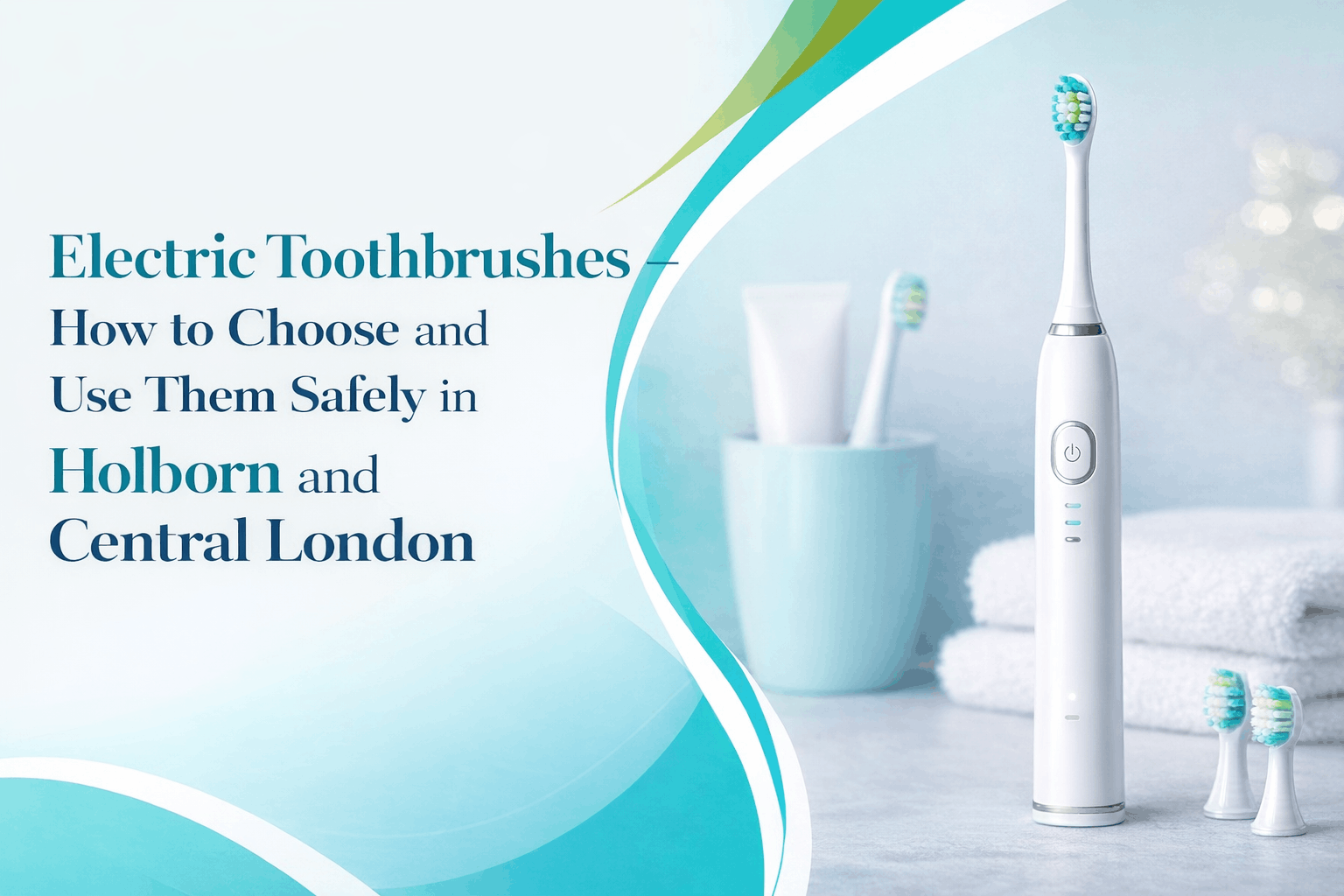
Electric toothbrushes are now a daily essential, but there is still confusion about which type to choose and how to use them safely. The truth is that both oscillating and sonic types can work very well when used correctly. What matters most is how you hold and move the brush.
* Oscillating‑rotating brushes: These have small, round heads that rotate and pulsate (e.g., Oral-B professional models).
* Sonic toothbrushes: These have longer, traditional‑shaped heads that vibrate at a very high frequency (e.g., Philips Sonicare, Suri, Oral-B iO).
* Place the brush head at a slight angle towards the gum margin.
* Gently rest the head on the tooth—do not scrub.
* Let the brush head stay on each tooth for a couple of seconds.
* Follow the gum line slowly from tooth to tooth.
Key idea: It is not the hard scrubbing that cleans your teeth; it is the gentle movement of the bristles and the toothpaste slurry (mixture of paste, saliva, and water) just in front of them.
* Place the head at a 45-degree angle to the gum line.
* Hold it lightly so the bristles just contact the tooth.
* Let the vibrations disrupt the plaque.
Incorrect use can lead to:
* Gum recession from heavy pressure.
* Notches (abrasion) at the neck of the teeth.
* Increased sensitivity due to exposed dentine.
* Apply toothpaste and position the head before switching on.
* Start with outer surfaces, working slowly around the mouth.
* Clean the inner surfaces, paying attention to the back of the front teeth.
* Clean the biting surfaces with gentle movements.
* Use the built-in timer (usually 2 minutes).
* Spit, don't rinse, to keep fluoride on the teeth.
For many, yes. The consistent motion and timer achieve a more thorough clean.
Not if used correctly. Damage usually comes from pressing too hard.
Typically every 3 months, or sooner if bristles are splayed.
With Associate dentist only.
Dr Fabrizio Castellari, Dr Moshin Nathu, Dr Nayanthara Perera, Dr. Oliver Tomlinson. CHECK- UPS Down from £98 to £55Small X-rays are included if needed.
FREE Whitening consultation included.